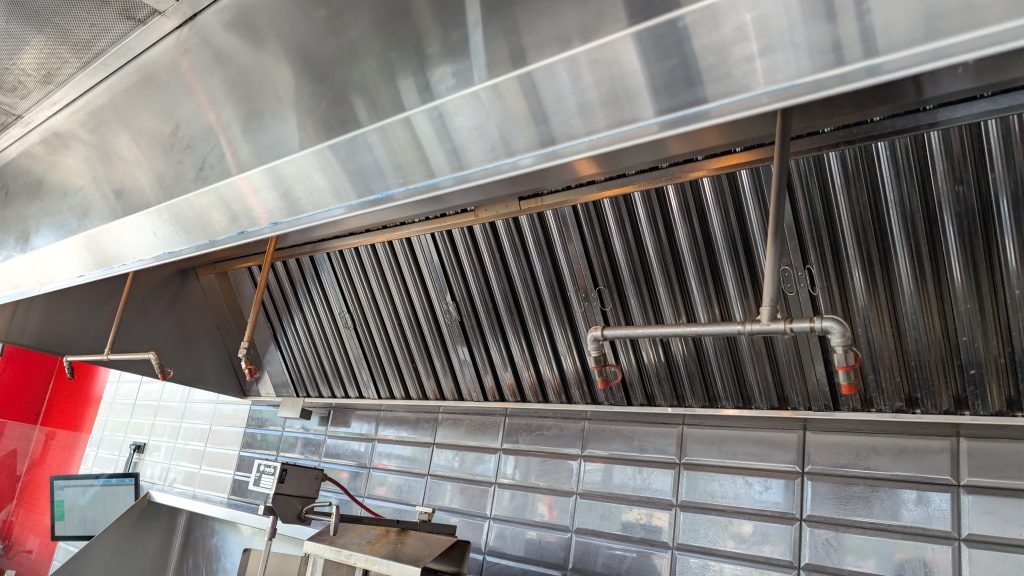
Grease filters are the first line of defence in your kitchen exhaust system. Every hour your line is running, they catch grease-laden vapour before it reaches your ductwork and rooftop fan. When they’re clogged, that grease goes somewhere else — into the duct, where it’s far more expensive to remove and far more dangerous to leave.
Total Hoodz provides professional hood filter cleaning for restaurants, hotels, care facilities, schools and food trucks across Edmonton, Sherwood Park, St. Albert, Leduc and the surrounding communities. We remove your filters, degrease them properly off-site or on-site, and reinstall them — with documentation you can hand to a fire inspector.
What professional hood filter cleaning involves
Wiping the face of a filter in a pot sink is not filter cleaning. Grease penetrates the full depth of a baffle assembly, and it hardens into a varnish that dish detergent will not touch.
Our service covers:
- Removal and inspection of every filter in the hood, checked for warping, damaged baffles, missing handles and corrosion
- Full-depth degreasing in a heated soak tank using commercial alkaline degreaser
- High-pressure rinse to flush loosened grease out of the baffle channels
- Grease cup and drip trough cleaning — the part most often skipped
- Correct reinstallation, seated tightly with no gaps between filters
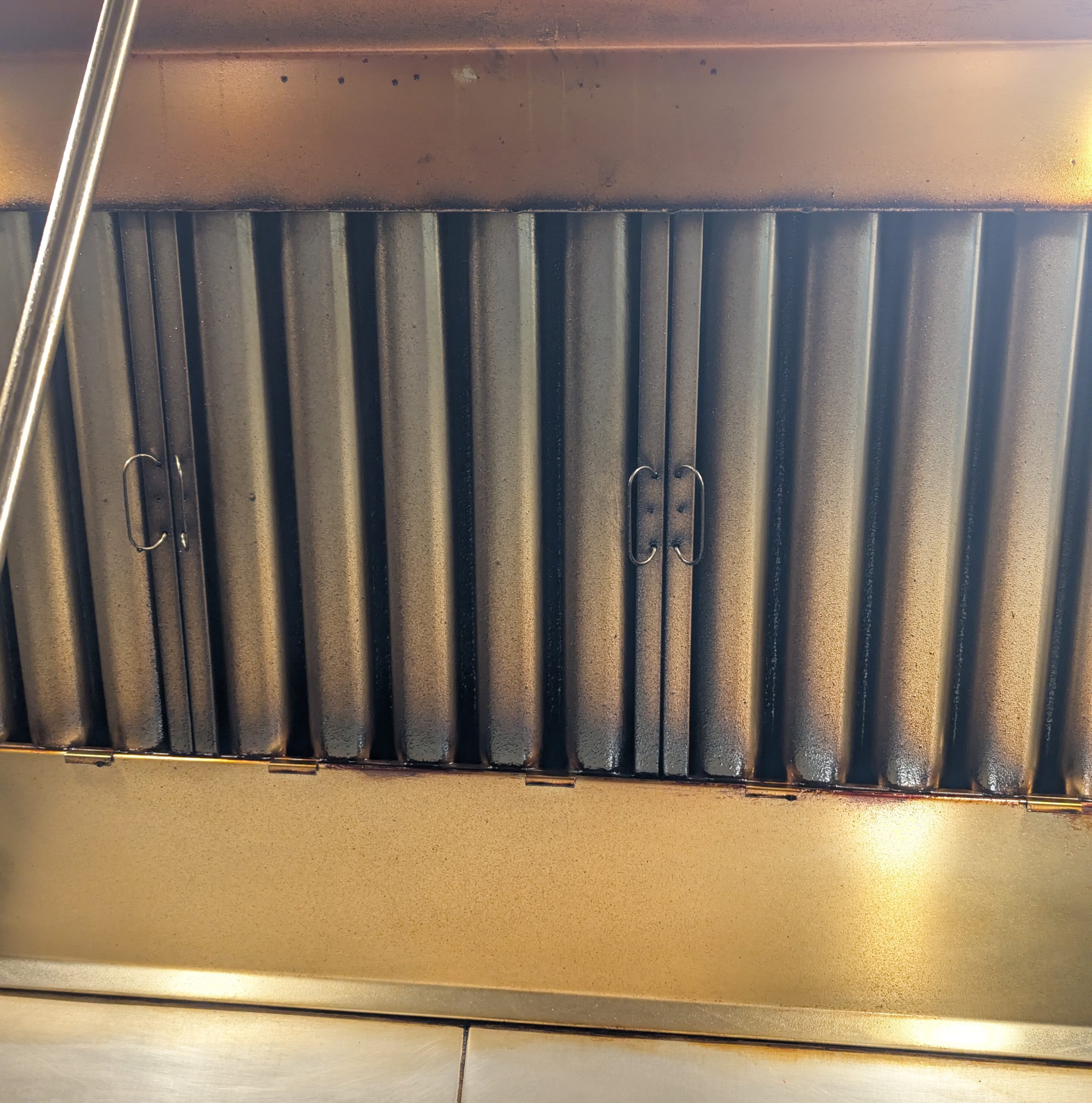
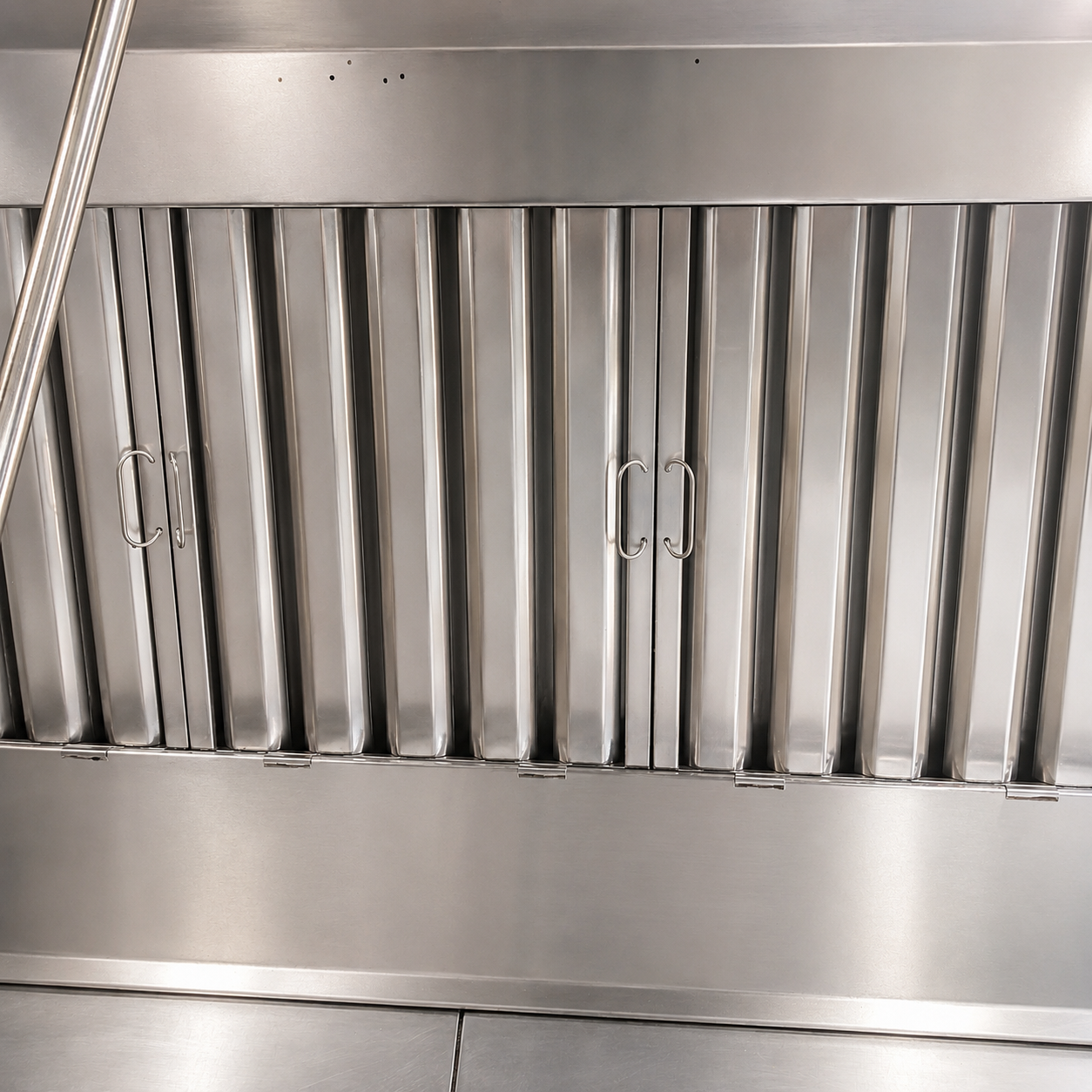
- Before-and-after photographs for your compliance file
Baffle filters vs. mesh filters — what NFPA 96 allows
This causes more confusion than any other filter question, so it’s worth being direct.
Baffle filters are the required type in a commercial grease hood. They use a series of overlapping vertical channels that force grease-laden air to change direction sharply. Grease can’t make the turn, so it condenses on the metal and drains down into the grease cup. They’re built from stainless or galvanized steel, they’re listed and labelled to UL 1046, and they can be degreased and reused for years.
Mesh filters — layered expanded metal — are not permitted in commercial kitchen grease hoods under NFPA 96. They trap grease inside the mesh rather than draining it, they clog quickly, and they become a fuel source directly in the airstream. If your kitchen has mesh filters in a grease hood, that’s a code issue an inspector can write you up for, and we’ll flag it during our first visit.
NFPA 96 also requires that grease filters be installed at an angle of at least 45 degrees from horizontal, and that a grease collection device sits beneath them. We check both on every service.
Before publishing: verify these requirements against the NFPA 96 edition your AHJ enforces (your NFPA page cites the 2024 edition). Section numbering shifts between editions, and publishing an incorrect citation in front of fire inspectors would cost you credibility.
Our soak tank degreasing process
- Site assessment. We count and inspect your filters, and note anything damaged or non-compliant.
- Removal and containment. Filters come out and go straight into sealed transport containers. No grease on your floors.
- Hot soak. Filters go into a heated alkaline degreasing solution that dissolves polymerised grease the whole way through the baffle channels. Soak time depends on how heavily loaded they are.
- Pressure rinse. High-pressure hot water flushes dissolved grease out of the channels and off the frames.
- Drying and inspection. Filters are dried and checked again. We tell you honestly if one is past saving.
- Reinstallation. Filters go back correctly seated, in the right orientation, with the grease cup clean and in place.
- Documentation. Dated before-and-after photos and a service record for your file.
How often do commercial kitchen filters need cleaning?
Your kitchen staff should be cleaning filters routinely — most Edmonton operations do this weekly, high-volume lines nightly. Professional degreasing is a different job and happens on a longer cycle.
| Kitchen type | Staff cleaning | Professional degreasing |
|---|---|---|
| Solid fuel, charbroiling, wok | Daily | Monthly |
| High volume, 24-hour, heavy fry | Daily | Every 1–3 months |
| Moderate volume dining | 2–3× weekly | Every 3–6 months |
| Low volume, seasonal, institutional | Weekly | Every 6–12 months |
These are practical guidelines based on cooking volume and fuel type, not fixed code requirements. NFPA 96 sets inspection intervals for the full exhaust system — see our NFPA 96 standards page — and requires that grease removal devices be cleaned before grease accumulates to hazardous levels. Your authority having jurisdiction and your insurer may set stricter terms.
Not sure where you land? We’ll tell you after one look at your filters.
Filter exchange for Edmonton restaurants
For kitchens that can’t afford downtime, we run a filter exchange. We arrive with a clean, degreased set matched to your hood, swap them for your dirty set in minutes, and take the dirty ones away for processing. Your line never stops and your hood is never running unprotected.
This works particularly well for high-volume operations, multi-location groups, and any kitchen that runs continuous service.
Signs your hood filters need attention now
- Grease dripping from the filters or pooling on the cookline
- Smoke lingering over the line instead of being drawn up
- The hood noticeably louder, or the fan straining
- Visible grease inside the hood plenum behind the filters
- Filters that feel heavy, or that you can’t see light through
- Heat building up on the line during service
- A fire inspector’s note about grease accumulation
When a filter needs replacing rather than cleaning
Filters aren’t permanent. Replace them when you see warped or separated baffles, corrosion that’s eaten through the frame, missing or broken handles, gaps when installed side by side, or any filter that’s no longer listed and labelled. We’ll tell you when a filter has reached that point rather than cleaning it and handing back something that isn’t doing its job.
Request a Call Back
Why choose Total Hoodz?
Our trained technicians thoroughly clean hood filters to help improve airflow, maintain compliance with NFPA 96 guidelines, and extend the life of your kitchen exhaust system. Regular filter cleaning also helps create a cleaner, safer, and more efficient workspace for your staff.
Professional hood filter cleaning for all commercial kitchens
Helps reduce grease buildup and fire hazards
Improves ventilation and exhaust system performance
NFPA 96 compliant cleaning practices
Reliable service across Edmonton and surrounding communities
Hood Filter Cleaning FAQs
Cost depends on filter count, size, and how heavily loaded they are. A small kitchen with six filters is a very different job from a hotel with forty. We quote after a free on-site inspection so the number you get is the number you pay. Filter cleaning bundled with a full hood and duct clean usually works out cheaper than booking it separately.
Your staff should be cleaning the filter faces regularly, and that’s genuinely useful. But grease penetrates the full depth of a baffle assembly and hardens into a varnish that a pot sink and dish detergent won’t remove. Without a heated soak and pressure rinse, the channels stay loaded even when the surface looks clean.
Most manufacturers advise against it. Dishwasher detergents can pit and corrode aluminium filters, warm water alone doesn’t dissolve polymerised grease, and you end up pushing grease into your dish machine. A heated degreasing tank is the right tool.
No. NFPA 96 prohibits mesh filters in commercial grease hoods. They trap grease in the mesh instead of draining it, clog quickly, and act as fuel directly in the airstream. Baffle filters listed to UL 1046 are the required type.
Most Edmonton kitchens are done within one to three hours depending on filter count. With our filter exchange, the swap itself takes minutes.
Yes. Every service comes with dated before-and-after photographs and a service record you can keep in your compliance file for your inspector or insurer.
Yes — Sherwood Park, St. Albert, Leduc, Spruce Grove, Stony Plain, Beaumont, Fort Saskatchewan and Nisku.
We’ll tell you and show you the photo. Warped baffles, corroded frames and broken handles mean the filter isn’t performing, and cleaning it won’t change that. We can source replacements sized to your hood.